- Home /
- Tourist Places /
- Nahargarh Fort
Nahargarh Fort
★ Be the first to reviewEntry Fees:
- Indians: ₹100
- Foreign tourists: ₹600
About Nahargarh Fort
Visiting hours: 10.00 AM to 5:30 PM
An Opulent Structure Of An Era Gone By…
“Welcome to Majestic Realms of Nahargarh Fort, Jaipur”
As an avid traveller, you must have come across many stories being narrated about the once majestic Nahargarh Fort of Jaipur. With a structure towering in Krishna Nagar, there is a certain effervescence that captures the mind of the wanderlust. Why is Nahargarh famous? What sets it apart from the other forts and structures of the Rajput era?
History of Nahargarh Fort
Folklore and history combined to take you by surprise…
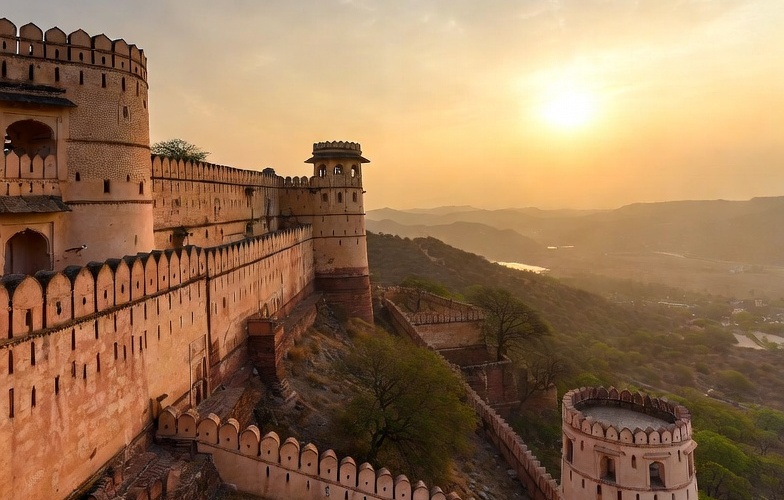
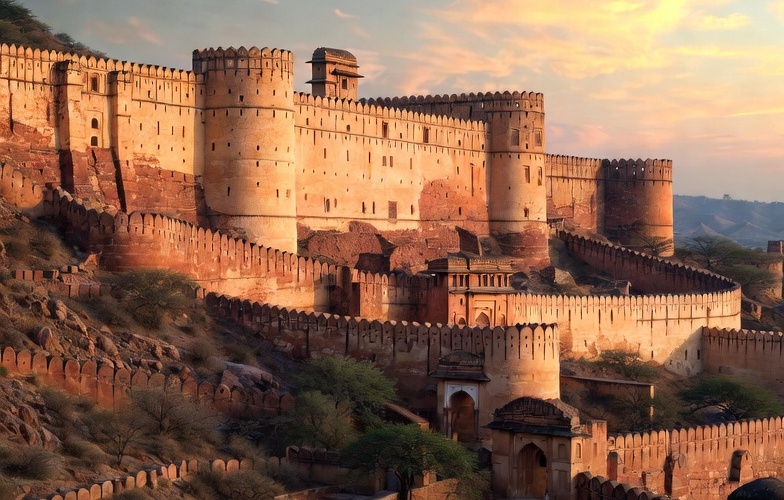
Overlooking the gorgeous Pink City of Jaipur lies a magnificent structure – Nahargarh Fort. Built in 1734 by Maharaja Sawai Jai Singh II, the founder of Jaipur, encompassed a larger than life structure that would not only protect the city but also add to its charm and richness. It was originally named ‘Sudarshangarh Fort’ and was later changed to Nahargarh, which means ‘Abode of Tigers’.
#Trivia- Nahargarh has never come under attack from any forces during the course of its history till date.
The palace was initially constructed as a peaceful retreat for the king and the royal family, overlooking the crest of Jaipur city.
(function(){window.pagespeed=window.pagespeed||{};var b=window.pagespeed;function c(){}c.prototype.a=function(){var a=document.getElementsByTagName("pagespeed_iframe");if(0<a.length){for(var a=a[0],f=document.createElement("iframe"),d=0,e=a.attributes,g=e.length;d<g;++d)f.setAttribute(e[d].name,e[d].value);a.parentNode.replaceChild(f,a)}};c.prototype.convertToIframe=c.prototype.a;b.b=function(){b.deferIframe=new c};b.deferIframeInit=b.b;})(); pagespeed.deferIframeInit();
#Trivia- The Fort was used as a place of shelter for the Europeans of the region along with the British Residents’ Wives to protect them during the 1857 Indian Mutiny or India’s War for Independence.
It is located on the oldest mountain range of the world, Aravalli Hills, and presents an eclectic view of the entire city, glittering with modern lights. The fort underwent a renovation by the Maharaja of Jaipur in the year 1868.
Architecture of Nahargarh Fort
A structure is defined by its architecture and Nahargarh Fort in Jaipur takes the cake…
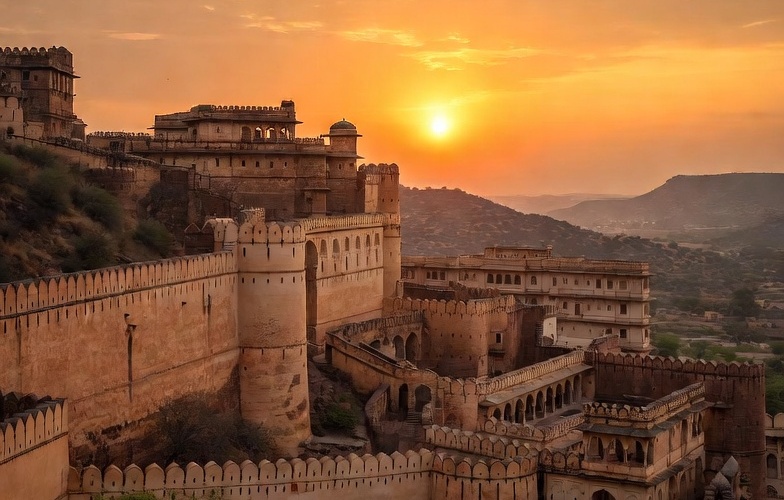
This magnificent fortification was built originally to protect the city from invaders, but it never faced a single war. The fort follows the Indo-European architectural style, lined with multiple gorgeous structures inside the fort. It is said to be over 700-ft high.
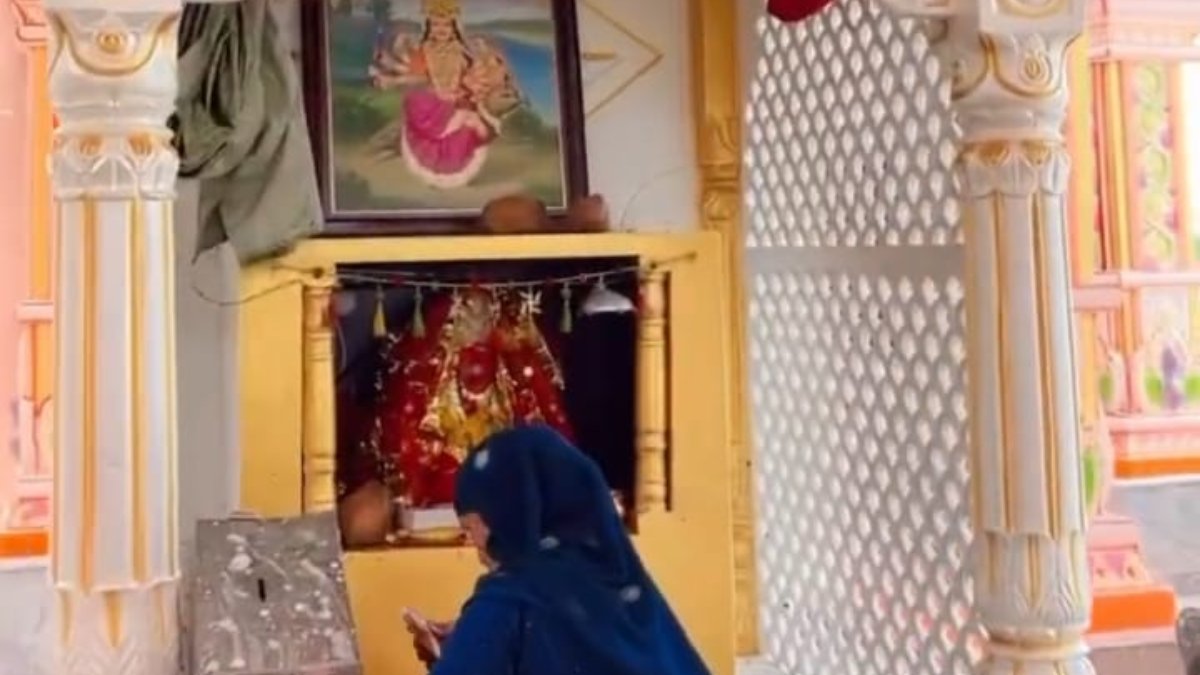
The left of the fort ‘Tadigate’, has an entrance gate with a temple dedicated to the deity of the Jaipur monarchs. Besides this, there is another temple inside the fort dedicated to the Rathore Prince Nahar Singh Bhomia.
#Trivia- Legend has it that the fort is said to have undergone an obstruction by a spirit during its construction that was believed to be of Nahar Singh. Thus, the name ‘Nahargarh’ came as given in order to pacify the spirit of the Rathore Prince, by building a temple dedicated to him inside the fort.
Inside the fortress lies a two-storey building, called Madhavendra Bhawan’ built by Sawai Madho Singh. It has suites of the king and his 12 queens, which is further divided into 9 quarters or similar apartments, with each having a lobby, bedroom, kitchen, toilets and store.
The other structures inside the palace are ‘Diwan-i-aam’ or the House of Commoners, where the king met with his loyal subjects and listened to their problems.
#Trivia- The Nahargarh Fort of Jaipur was never directly attacked but lays witness to many historical events such as the Maratha Treaty and shelter to the Europeans.
The queens' apartments were built in identical fashion and were constructed to let the Maharaja have his privacy, without letting any other queen know which one he was visiting.
There is a water tank in the fort that is built in a compact manner, with water channelling down the hill to the tank for storage. You can also observe a huge number of bats in certain top floor rooms of the fort. Beware if you are easily scared!
The corridors of the fort are lined with frescoes that are delicate and inspired from the architecture of the European and Rajput style. The intricate minakari work showcased along the corridors and connecting rooms are a treat to the eyes.
One can see a beautiful line-up of Elephants, horses, processions and nature that gives it a mesmerizing effect. Victorian floral paintings boast of fine craftsmanship and give a glimpse into the times and lives of an era gone by.
Until April 1944, the Jaipur government used the fort for official purposes of solar time reading from the Samrat Yantra in the Jantar Mantar Observatory, with the help of a gunshot fired as the time signal. It was also used as a hunting residence of the then Maharajas.
#Trivia- there are several vantage points around the fort that give you a panoramic view of the city. A great way for the photographers' lens to meet the skyline.
The fort underwent multiple palace constructions between 1883 to 1892 by the then Maharaja of Jaipur, Sawai Ram Singh.
Things to do
Ratings & Reviews
From visitors to Nahargarh Fort who wrote on Khoj Juntion.
No reviews yet. Been here? Be the first to share your experience.
Visited Nahargarh Fort? Your review helps other visitors.
Write a reviewMore places to visit in Jaipur
Plan a full day — these are close to Nahargarh Fort or popular with visitors.


Explore city guides
Day-by-day plan, trip budget and the best time to go.